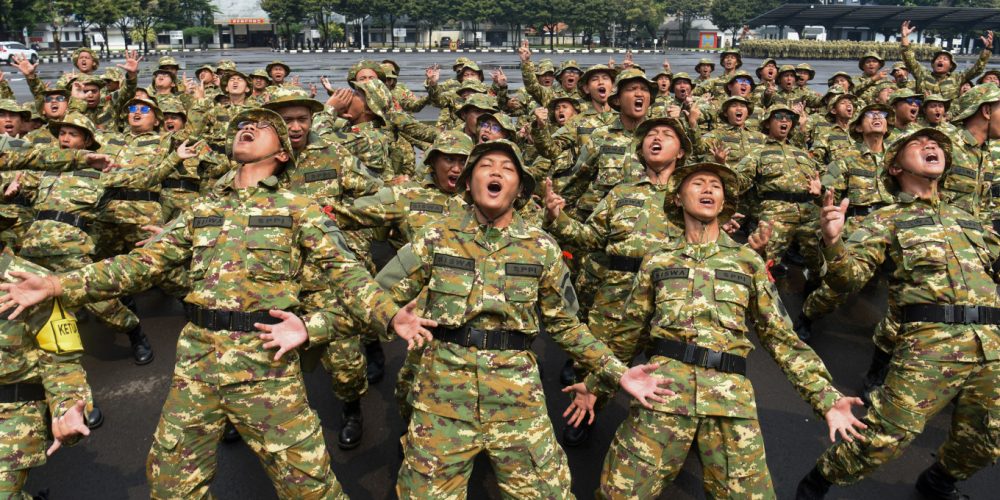
The fatalities of five managerial candidates from the Merah Putih Village Cooperative (KDMP) during a basic military training program (latsarmil) constitute a critical institutional failure rather than an isolated oversight. This incident carries significant legal and structural implications, potentially implicating the government in human rights violations — specifically regarding the right to security and the right to life.
The disclosure of information by the Ministry of Defense (Kemhan) regarding the deaths of these five candidates, alongside their medical timelines, indicates alleged fatal vulnerability in the execution of latsarmil across various military education units. Within a span of fewer than ten days in mid-to-late June 2026, five participants died due to varying yet interrelated clinical failures brought on by extreme physical exertion. The cases of Yonanda Muhammad Taufiq at the Army Doctrine, Education, and Training Command (Kodiklatad) Combat Training Center in Baturaja, Anisa Muyassaroh at the Rindam VI/Mulawarman Regional Military Training Regiment in Balikpapan, and Nola Dya Sari at the Kalimantan State Defense Training Facility demonstrate a similar pattern, where a drastic decline in physical condition culminated in cardiac arrest, which in Anisa’s case was specifically triggered by heat stroke.
While, the death of Novia Rahmadhani Sihotang at the Air Force Language Training Center in Jakarta due to active pulmonary tuberculosis, and that of Muhammad Rifki Renaldi Gunawan at the Paratrooper Battalion 465 due to pneumonia compounded by comorbidities of hypertension and obesity, expose another equally critical issue. Analytically, this distribution of medical data reflects not only the fatal risks inherent in intensive military physical activity but also points to fundamental flaws in the initial health screening and periodic medical monitoring of civilian trainees within military environments.
The delayed repatriation of 32 pregnant trainees following multiple fatalities reveals a fundamental failure in initial risk planning, showing that safety standards were only enforced after a crisis of public legitimacy.
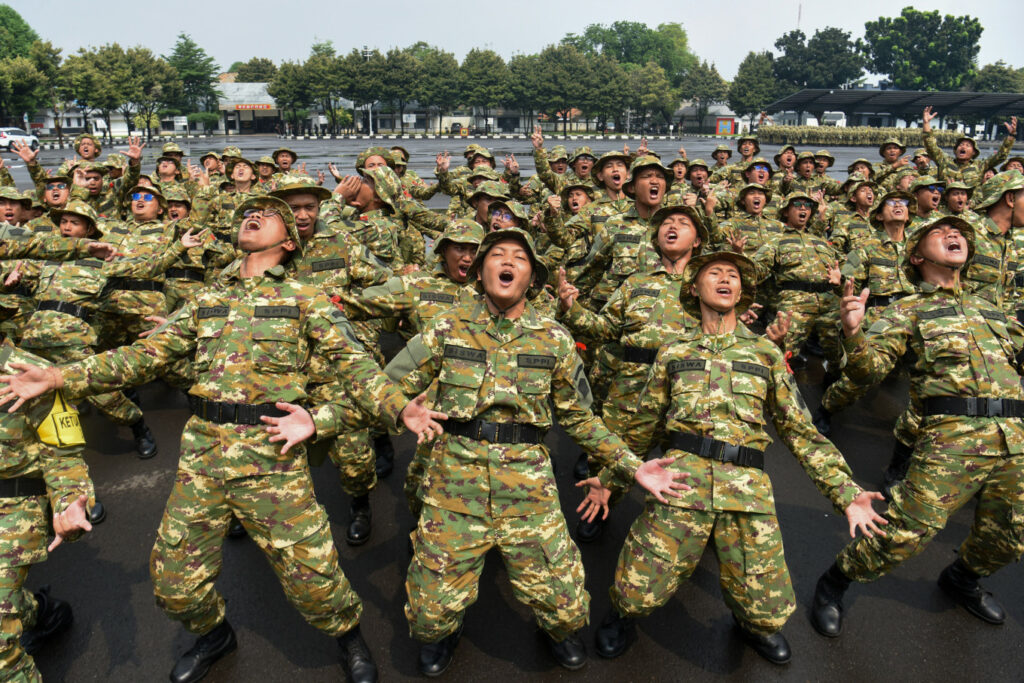
This mass latsarmil program involves 30,000 KDMP managerial candidates and 5,476 Kampung Nelayan Merah Putih (KNMP) candidates, organized by the Ministry of Defense. These candidates are part of the Indonesian Graduate Development Mobilization (SPPI) — a signature initiative of the Prabowo administration aimed at recruiting university graduates (ranging from bachelor’s to master’s degrees) to act as developmental engines and community leaders across various regions.
Scheduled from June 14 to July 31, 2026, across 67 military units nationwide, the program subjects these civilian candidates to 30 days of military training and 15 days of managerial courses.
Following the evaluation of the five fatalities, the Ministry stated that all remaining participants would undergo re-examination and physical classification, as stated by the Head of the Ministry’s Human Resources Development Agency, Maj. Gen. Ketut Gede Wetan. Nevertheless, the Ministry has confirmed that the training program will proceed without suspension.
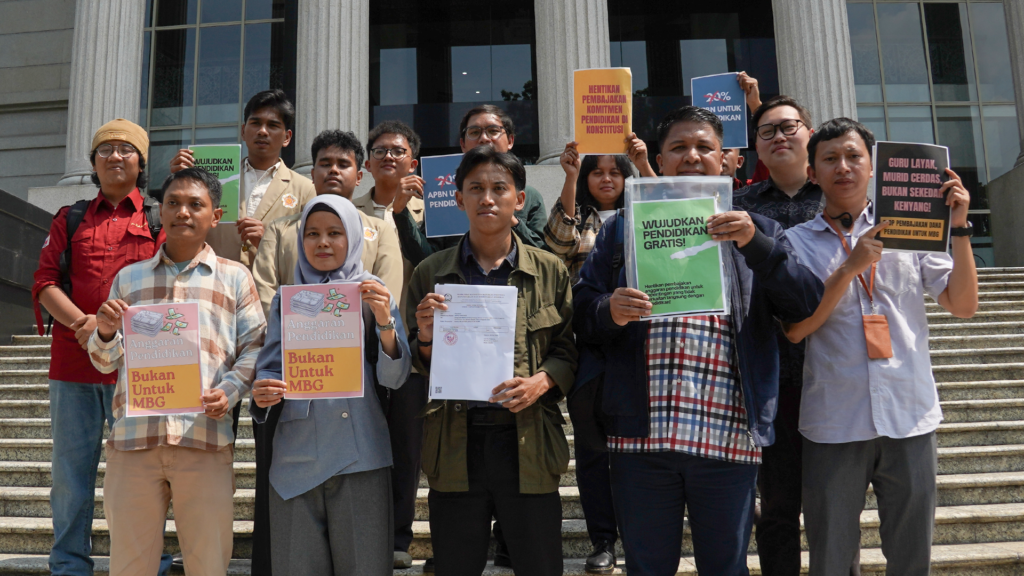
The KDMP/KNMP program itself has emerged as one of the most problematic development projects in recent history, failing to uphold the philosophical values of cooperative movements due to its highly centralized, top-down implementation. Financed through a combination of state bank loans, state funds (APBN/Village Funds), and the independent capital of members, the program presents significant corruption risks. Furthermore, it infringes upon the rights of rural communities regarding village fund allocations, which were slashed by the central government by 58.03% from the original ceiling of 60.57 trillion rupiahs. Consequently, the government redirected 34.57 trillion rupiahs from the 2026 state budget solely for the construction and operation of the KDMP. This sweeping fiscal reduction, executed via Article 15 Paragraph 3 of Ministry of Finance Regulation No. 7/2026, completely bypassed any consideration regarding the adverse impacts on local rural infrastructure development.
The salary structure for these managers during the first two years — which is allocated directly from the state budget — fundamentally violates the statutory framework of cooperatives as outlined in Law Number 25 of 1992 concerning Cooperatives. This law stipulates that remuneration mechanisms for cooperative management must be decided through the Annual Member Meeting (RAT) as the highest governing body, adjusted to the financial capacity of the cooperative based on principles of equity, transparency, and mutual cooperation.
Instead, the KDMP and KNMP were designed in an accelerated manner and are entirely controlled during their first two years by state-owned enterprises, specifically PT Agrinas Pangan Nusantara for the KDMP and PT Agrinas Jaladri Nusantara for the KNMP, heavily backed by military apparatuses. The involvement of PT Agrinas Pangan Nusantara—a construction firm rebranded under the current administration for food logistics—ignited severe controversy by importing over 105,000 Indian cargo vehicles from Mahindra and Tata Motors. Valued at 24.66 trillion rupiahs and allocated exclusively for the cooperative program, this procurement proceeded in phases despite widespread protests from a stagnant domestic automotive sector over its contradiction of state rhetoric on local production. Compounding this policy disconnect, regional cooperative administrators were entirely excluded from assessing fleet requirements, as procurement decisions were completely centralized in Jakarta.
By mid-2026, President Prabowo had inaugurated 1,061 KDMP units, though the total target was halved from 80,000 to 40,000 units. Despite accelerated inter-ministerial efforts, the project faces localized pushback. Rural communities in Sumedang (West Java), Rembang (Central Java), and Detusoko (East Nusa Tenggara) have strongly protested unilateral developments that displace public facilities and threaten open spaces.
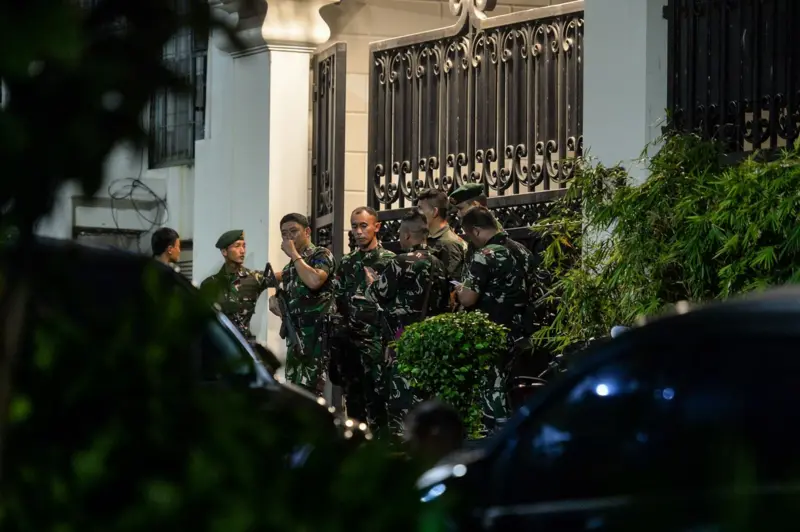
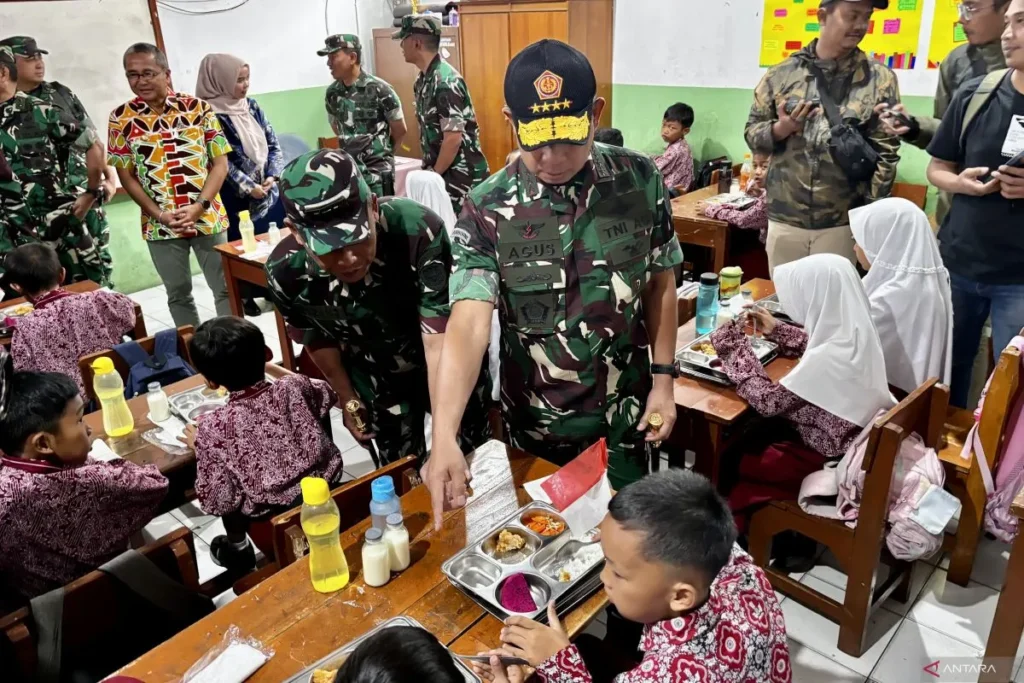
The absolute integration of military elements into this economic program raises a vital analytical question: must the supply chain distribution management planned by the KDMP/KNMP mirror a strict hierarchical mechanism? This arrangement raises valid fears that the management of a grassroots populist economy is being dominated to a military command culture, whereas market transactions are inherently open mechanisms driven by supply and demand, entirely devoid of command structures.
The Ministry of Defense’s claim that latsarmil is essential for instilling high discipline, leadership, and professional resilience under pressure constitutes a unilateral and flawed assumption. In principle, these professional virtues exist thoroughly within civilian professional circles without requiring military-style indoctrination. Research conducted by the Center of Economic and Law Studies (Celios) reveals that the three primary obstacles facing Indonesian cooperatives are a lack of managerial capacity, insufficient capital, and deficient infrastructure or market access. These are the structural challenges the state must resolve; addressing them through military training programs represents a fundamental mismatch of solution to problem.
The existing research and criticism directed at the institutional design of the KDMP/KNMP, combined with the government’s dismissal of public feedback, demonstrate a pattern of systemic neglect. When such institutional neglect results in the loss of human life, an immediate moratorium on the program becomes a legal necessity. Furthermore, lawmakers must be urged to exercise their right of interpellation — a constitutional oversight function of the House of Representatives to formally demand explanations from the government regarding critical, strategic policies that broadly impact society.
An independent and exhaustive investigation into the cause of death of these five managers, including mandatory autopsies if required, is essential to guarantee the public’s right to transparency. This independent process must verify the Ministry of Defense’s claims that all participants received standardized medical treatment and had undergone comprehensive initial screenings, including blood and urine laboratory work, pregnancy tests, thoracic X-rays, EKGs, abdominal ultrasounds, and evaluations of vision, dental, posture, and psychiatric health.
The deaths of these five young professionals within the SPPI network cannot be minimized as mere statistical anomalies; they represent human lives, familial hopes, and core constitutional values. Under the legal frameworks of Law No. 39/1999 on Human Rights and Law No. 26/2000 on Human Rights Courts, the state bears an active obligation to safeguard its citizens. By refusing to suspend training operations despite possessing the clear administrative, logistical, and statutory capacity to intervene, the government’s inaction directly satisfies the legal threshold for a violation by omission. Because the state maintained absolute authority and the resources required to mitigate these systemic risks, its failure transforms an operational tragedy into a matter of strict state accountability, where treating human lives as fractional casualties actively erodes democratic principles.
This Op-Ed was written by Muhamad Isnur, Chairperson of YLBHI, and has been published on The Jakarta Post, 3 July 2026, under the same title.